.webp) avangame.com
avangame.comHades II and the Hidden Challenge of Magick Management During Long Runs
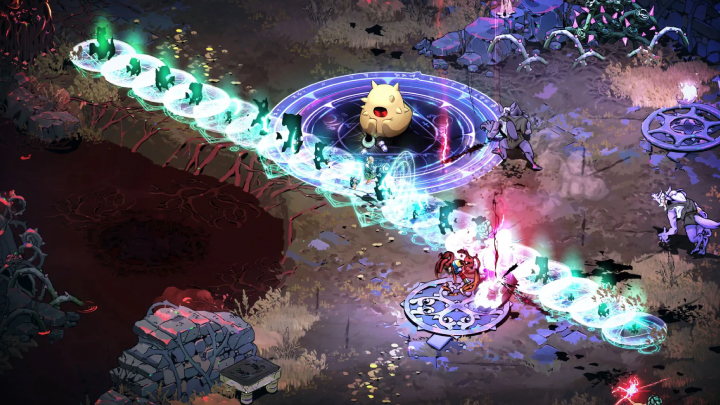
Hades II introduces a combat system in which success depends on more than quick reactions and powerful attacks. Playing as Melinoë, players must manage health, positioning, enemy patterns, Boons, and Magick while adapting to a constantly changing selection of upgrades. Among these systems, Magick management creates one of the most interesting strategic challenges because it determines how frequently players can use Omega moves and how effectively they can respond to dangerous encounters.
The difficulty is not simply that Magick runs out. The real challenge is understanding when spending it creates a meaningful advantage, when charging an Omega move exposes Melinoë to unnecessary danger, and how to build a reliable recovery system without sacrificing other important abilities. A character can possess impressive damage bonuses and still struggle if the build depends on abilities that cannot be used consistently.
This issue becomes especially important during longer runs. Early encounters may allow players to experiment freely, but later areas demand more deliberate decisions. Enemies become harder to control, mistakes can cost valuable health, and bosses require players to recognize safe opportunities rather than attack continuously. A successful strategy must therefore connect Magick efficiency, weapon behavior, Arcana choices, Boon selection, and movement into one coherent combat plan.
Understanding Magick and the Purpose of Omega Moves
Magick is the resource that powers Melinoë's Omega moves, which are charged versions of her core abilities. Depending on the weapon and ability, these moves can provide stronger damage, different attack patterns, improved area coverage, or effects that support a particular build. Their value comes from offering more possibilities than ordinary attacks alone.
However, Omega moves are not automatically the best option in every situation. Charging an ability can take time, consume Magick, and limit how quickly the player can react to an approaching threat. An ordinary attack may deal less damage per hit but allow Melinoë to remain mobile and respond more easily to enemy behavior. The decision is therefore about more than comparing damage numbers: players must consider the cost of committing to a move.
The Difference Between Spending and Wasting Magick
Spending Magick is worthwhile when the resulting advantage justifies the resource cost and the time required to execute the ability. An Omega move that damages several enemies or takes advantage of a boss's recovery period may provide excellent value. The same move can be inefficient when used against a distant enemy that is about to move out of its effective area.
Players should evaluate Omega moves according to three questions:
- How much damage or control can the move provide?
- Can Melinoë complete the move without taking unnecessary damage?
- Does the move support the build's main source of damage?
These questions are more useful than following a rigid rule about how often to use Omega attacks. Different weapons and Boon combinations create different priorities, so efficient Magick management must respond to the actual build.
Why Ordinary Moves Still Matter
Ordinary attacks, Specials, and Casts remain important even when a build focuses on Omega abilities. They allow players to continue dealing damage while preserving Magick for moments when a charged move offers a larger advantage.
A balanced approach also provides flexibility. If enemies become aggressive or move outside a charged ability's effective range, Melinoë can use ordinary actions to reposition, apply effects, or finish a weakened opponent. The purpose of Magick is to expand the player's options, not to make every other action irrelevant.
Learning When to Charge an Omega Move
The timing of an Omega move can matter as much as the upgrade attached to it. Charging an ability during a safe opening allows the player to benefit from its stronger effect without accepting unnecessary risk. Charging while surrounded by enemies, however, can leave Melinoë vulnerable to attacks that interrupt the intended sequence.
This creates a recurring combat decision: should the player begin charging immediately, or should they first create enough space to use the ability safely? The answer depends on enemy positions, attack patterns, available movement options, and the weapon being used. A ranged attack may be easier to prepare from a distance, while a close-range ability may require the player to wait until nearby enemies are recovering from an attack.
Recognizing Safe Windows
Enemy behavior provides useful information about when to commit to a charged move. Some attacks have noticeable preparation animations, while others leave an opponent temporarily exposed after the attack finishes. These moments can create opportunities for damage.
Instead of charging whenever Magick is available, players can build a habit of observing the battlefield before committing. A useful sequence is:
- Identify the nearest threats and their positions.
- Watch for an incoming attack or a temporary opening.
- Move to a safer position if necessary.
- Charge the Omega move when the opportunity is appropriate.
- Return to ordinary attacks or movement once the opening closes.
This approach reduces the number of situations in which Melinoë is locked into an attack while an enemy is preparing to strike.
Why Repeated Charging Can Become Predictable
Players who discover a powerful Omega move may begin using it repeatedly, even when the battlefield changes. This can make their behavior predictable and cause them to ignore safer alternatives.
A stronger approach is to treat charged moves as part of a larger sequence. The player might use Cast to control an area, reposition to avoid incoming attacks, and then charge an Omega ability when enemies are contained or temporarily vulnerable.
The value of this sequence comes from coordination. Each action prepares the conditions for the next, making the overall combat plan more reliable than repeatedly attempting the same powerful move.
Choosing a Weapon That Matches Magick Management
Weapon selection influences how a player spends Magick because each weapon changes the shape, range, speed, and practical use of its attacks. A strategy that works well with one weapon may become inefficient with another, even if both builds have access to similar categories of Boons.
The important question is not simply which weapon deals the most damage. Players should consider which moves they can use consistently, which attacks leave them exposed, and whether the weapon's Omega abilities fit their preferred approach to combat.
Build Around One Main Action
A focused build usually begins by identifying the move that will provide most of the player's reliable damage. This could be an Attack, Special, or Omega version of one of those actions. Once that decision is made, the player can prioritize upgrades that directly improve the chosen move.
For example, a player who prefers ranged attacks may value a setup that improves projectile damage and allows them to attack without standing close to enemies. A player who prefers faster close-range combat may prioritize effects that strengthen repeated hits and create opportunities to move away before the enemy retaliates.
The key is to avoid treating every ability as equally important. When upgrades are distributed across too many unrelated actions, the build may become versatile but lack a dependable way to deal with demanding encounters.
Match Magick Costs to the Weapon's Rhythm
Some combat styles naturally encourage frequent Omega moves, while others can function effectively with a mixture of ordinary and charged attacks. Players should observe how quickly their preferred weapon consumes Magick and how much time its strongest moves require.
If a weapon's main attack repeatedly consumes Magick, the player should consider recovery options early. If the weapon remains effective through ordinary attacks, Magick can instead be reserved for specific opportunities, such as controlling a group or exploiting a boss's opening.
A suitable weapon is one whose combat rhythm the player understands well enough to make consistent decisions. Familiarity often matters more than selecting a theoretical high-damage setup that is difficult to execute under pressure.
Building a Reliable Magick Recovery System
A Magick-focused build needs a plan for replenishing the resource it consumes. Without a reliable recovery method, the player may begin encounters with strong abilities but lose access to them when a prolonged fight demands repeated use.
Recovery options can come from Boons and other upgrades, and their exact behavior depends on the selected effect. Some provide regeneration under particular conditions, while others restore resources through specific actions or alter how much Magick remains available. Players should read the descriptions carefully rather than assume that every recovery effect works continuously.
Understand the Conditions of Each Recovery Effect
A recovery effect may appear powerful but perform poorly if its activation conditions do not match the player's normal behavior. An effect that requires a particular type of action is less useful if the build rarely performs that action. Similarly, a recovery option that depends on nearby enemies may be less convenient when the player prefers to maintain distance.
Before selecting a recovery effect, ask:
- What action activates the recovery?
- How often can that condition occur during ordinary combat?
- Does activating it require taking additional risks?
- Does the effect restore spendable Magick or change the amount available for use?
The last question is particularly important when an effect reserves or primes part of the resource pool. A larger displayed maximum does not necessarily mean that every point is available for Omega moves.
Recovery Should Support Damage, Not Replace It
Players can also make the opposite mistake by investing too heavily in Magick recovery. A build with excellent resource availability may still struggle if its attacks do not deal enough damage or if it lacks useful defensive and control effects.
The best recovery system is one that supports the build's main action without consuming every opportunity to improve damage or survival. If the player can already use the preferred Omega move frequently enough, another recovery upgrade may provide less value than a direct improvement to that move.
The goal is a sustainable balance: enough Magick to use important abilities consistently, enough damage to finish encounters efficiently, and enough flexibility to respond when the battle becomes unpredictable.
Selecting Boons Without Losing the Build's Focus
Boons are central to Hades II's run-based progression because they modify abilities and create combinations that can dramatically change combat. Their random availability encourages experimentation, but it also creates a problem for players who attempt to build around every appealing upgrade they encounter.
A powerful individual Boon does not necessarily improve the entire build. Its value depends on which action it affects, whether its conditions can be met consistently, and whether it complements the player's existing upgrades. An impressive effect can become a distraction if it encourages the player to abandon a reliable strategy for an entirely different one.
Prioritize the Ability That Already Works
When choosing between several attractive options, begin with the ability that has been most reliable during the current run. If the player's main source of damage is the Special, a Boon that improves the Special may be more useful than an upgrade for an Omega Attack that the player rarely uses.
This does not mean every choice must reinforce the same action. Defensive effects, area control, and utility upgrades can address weaknesses that direct damage bonuses cannot solve. The important distinction is whether a new Boon strengthens the plan or provides a necessary solution to a specific problem.
A practical priority order is:
- Improve the main source of damage.
- Address a serious weakness, such as poor crowd control or unreliable recovery.
- Add effects that work naturally with the established playstyle.
- Consider experimental combinations when the existing build is already dependable.
Adapt When the Available Boons Do Not Match the Plan
Because Boon selection involves randomness, players cannot expect every run to provide an ideal combination. A rigid strategy may fail when its most important upgrade does not appear.
Instead, establish a preferred plan and a fallback option. If the expected Magick recovery effect is unavailable, the player might rely more on ordinary attacks and reserve Omega moves for safer openings. If a desired damage upgrade does not appear, an available control effect might create more opportunities to attack without taking damage.
Adaptation is not the same as abandoning the build. It means preserving the original objective while changing the route used to achieve it.
Using Arcana Cards to Support Long-Term Consistency
Arcana Cards provide another layer of preparation because they influence the player's capabilities across runs. Their importance extends beyond raw damage. Depending on the selected cards, players can support survivability, resource management, and other aspects of combat that make a build more consistent.
The challenge is that the available capacity for activating cards creates trade-offs. A player cannot necessarily activate every desirable option, so each selection should serve a purpose. Cards should complement the weapon and combat plan rather than exist as a collection of individually attractive bonuses.
Choose Cards According to the Problem You Face
A player who regularly runs out of Magick may benefit from an appropriate resource-focused option. Someone who has sufficient Magick but struggles to survive might gain more from defensive support. A player whose damage is already reliable may instead prioritize an upgrade that helps finish encounters more efficiently.
This means the best Arcana arrangement can change as the player's understanding improves. Early attempts may require more forgiving defensive choices, while later runs may allow a greater emphasis on damage or specialized strategies.
Avoid Building Around Bonuses You Cannot Use Consistently
An upgrade is only valuable when its conditions fit the way the player actually fights. If a card rewards a specific action but the player rarely performs that action, its theoretical benefit may not translate into better results.
Before committing to a configuration, review the main combat sequence and ask which bonuses activate naturally. A focused arrangement that consistently supports the player's preferred actions can be more effective than a complicated setup that requires several conditions to align.
The broader lesson is that preparation should reduce uncertainty. Arcana Cards cannot eliminate the randomness of a run, but they can provide a stable foundation from which players adapt to the upgrades they receive.
Managing Magick During Ordinary Encounters
Resource management changes depending on the encounter. A room filled with relatively weak enemies creates different demands from a fight against a powerful opponent. Players who use the same Magick-spending pattern in every situation may either waste resources or miss opportunities to end encounters more efficiently.
In ordinary rooms, the priority is often to remove immediate threats while maintaining good positioning. If a single Omega move can hit several enemies or control a dangerous area, spending Magick may prevent the fight from becoming more complicated. If the remaining enemies are already weak, ordinary attacks may be sufficient.
Spend Resources According to the Threat
The most useful question is whether spending Magick now makes the encounter safer or shorter. A charged ability that prevents several enemies from attacking may be worth the cost, even if it does not deliver the highest possible damage. By contrast, charging a slow move against a single harmless target may provide little benefit.
Players should also consider the next few seconds of the fight. Using an Omega move may leave the character with fewer immediate options if another enemy approaches. That does not automatically make the decision wrong, but it means the player should understand what risks remain after the move finishes.
Recognize When to Stop Attacking
A common mistake is continuing to attack simply because the player has a damage opportunity. In Hades II, movement and observation can be just as important as offense.
If several enemies begin preparing attacks simultaneously, the best choice may be to reposition rather than continue charging. Once the immediate danger passes, the player can return to attacking from a better angle.
This rhythm of offense, observation, and repositioning makes resource management more reliable. It also prevents a powerful build from becoming dependent on the assumption that enemies will remain vulnerable throughout every encounter.
Changing the Strategy for Boss Encounters
Boss fights test Magick management in a different way because they often involve longer patterns, multiple attack phases, and fewer opportunities to deal damage safely. A strategy that clears ordinary rooms quickly may struggle against a boss that repeatedly moves away, changes its attack pattern, or punishes prolonged commitment.
The player must therefore separate damage potential from practical damage output. An ability may deal impressive damage when it connects, but its value falls if the boss frequently leaves its effective area or attacks before the move can finish.
Learn the Pattern Before Spending Heavily
Boss encounters reward observation. Players should identify the attacks that create openings, the moments when the boss moves away, and the situations in which charging an ability becomes dangerous.
During an early attempt, it may be useful to focus on learning these patterns rather than forcing maximum damage. Understanding when the boss is vulnerable helps the player use Magick more effectively in later attempts.
A simple approach is to divide the encounter into three stages:
- Observe the boss's movement and attack patterns.
- Use safe opportunities to apply damage and test the build.
- Commit to stronger Omega moves when the timing becomes predictable.
This approach is especially helpful when a player is unfamiliar with a boss or has a build that requires more time to charge its strongest abilities.
Preserve Flexibility When the Fight Changes
Bosses can shift between attack patterns, making a previously safe strategy less effective. Players should avoid becoming so committed to one attack sequence that they stop responding to what is happening on screen.
If a charged ability becomes difficult to use safely, ordinary attacks may offer more dependable damage until another opening appears. If the boss remains vulnerable long enough for a stronger move, the player can return to the intended rotation.
A good boss build is not one that performs perfectly under ideal conditions. It is one that still offers useful options when the fight does not unfold as expected.
Turning Failed Runs Into Better Magick Decisions
Failure is part of Hades II's progression, but repeated attempts become much more useful when players identify why a strategy stopped working. Losing an encounter does not automatically mean the weapon or Boons were wrong. The problem may have been a mismatch between the build's resource demands and the player's decisions during combat.
For example, a player may enter a boss fight with strong Omega damage but repeatedly spend Magick on low-risk targets earlier in the run. Another player may preserve too much Magick, finishing ordinary encounters slowly and missing opportunities to reduce incoming damage. Both players have resource-management problems, but their solutions are different.
Review the Cause Instead of Blaming Randomness
Random Boon availability can make some runs more difficult than others, but it does not explain every disappointing result. After a failed attempt, consider:
- Did the build have a clear main source of damage?
- Were Omega moves used during safe and valuable openings?
- Was Magick recovery compatible with the selected abilities?
- Did the player spend too much time charging attacks while exposed?
- Were defensive or control options sufficient for difficult encounters?
- Did the player adapt when the expected Boons failed to appear?
These questions help distinguish a weak build from a promising build that was used inefficiently.
Change One Major Variable at a Time
When experimenting with a new strategy, avoid changing the weapon, Arcana configuration, recovery approach, and main damage source simultaneously. If the next attempt performs better or worse, it will be difficult to identify the reason.
Instead, keep the parts that already work and adjust the weakest element. If Magick runs out too frequently, test a different recovery option. If damage is unreliable, improve the main attack or change how often the player attempts charged moves. If survival is the main problem, prioritize safer positioning and appropriate defensive support.
This method turns each attempt into a useful test rather than a completely new experiment.
Building a Consistent Combat Plan From Start to Finish
The strongest approach to Magick management is to treat it as part of a complete combat system. Resource spending, movement, Boon selection, weapon choice, and Arcana preparation should all support the same overall plan. When these elements work together, players can make decisions more confidently even when a run provides unexpected upgrades.
Consistency does not require performing the same actions in every room. It requires understanding why each action is being used. An Omega move should have a clear purpose, a recovery effect should support a real resource demand, and a new Boon should either improve the build or solve a meaningful weakness.
A Practical Framework for Each Run
Before beginning a run, establish a preferred weapon and a general combat approach. Decide whether the build will rely heavily on Omega moves or use them selectively. Select Arcana Cards that support the plan, then remain flexible when Boons become available.
During the run, reassess the build whenever an important upgrade appears. Check whether the current Magick supply and recovery options can support the intended sequence. If not, adjust the way resources are spent rather than forcing the original plan at every opportunity.
Before a difficult encounter, consider three things:
- Damage: Which move provides the most dependable damage?
- Safety: When can that move be used without unnecessary exposure?
- Sustainability: Can the build support repeated use, or should Magick be spent more selectively?
These questions are simple enough to apply quickly but broad enough to guide decisions across different weapons and encounters.
Mastery Comes From Understanding Trade-Offs
There is no single Magick strategy that works perfectly for every build. Some setups reward frequent Omega moves, while others achieve better results by using them selectively. Some encounters favor area control, while others reward patience and carefully timed attacks.
The important skill is recognizing the trade-offs before committing. Strong players do not merely search for the most powerful ability; they learn when that ability is useful, when it is risky, and what alternatives remain available.
Conclusion
Magick management is one of the defining strategic challenges in Hades II because it connects nearly every major part of combat. Omega moves can deliver powerful damage and useful effects, but their value depends on timing, positioning, weapon behavior, and the player's ability to maintain a workable resource supply. A build that ignores these relationships may appear powerful while producing inconsistent results in difficult encounters.
The solution begins with a clear combat plan. Players should identify their main source of damage, choose Boons that strengthen it, and use Arcana Cards to support the build's most important needs. They should also learn the conditions attached to Magick recovery effects, recognize safe opportunities for charged attacks, and adapt when a run does not provide the expected upgrades.
Ordinary attacks remain valuable because they preserve flexibility, while movement and observation help create safer opportunities to use stronger abilities. During boss fights, understanding attack patterns can be more useful than attempting to maximize damage at every moment. After a failed run, reviewing resource decisions and changing one major variable at a time helps turn frustration into meaningful progress.
Ultimately, successful Magick management is not about saving every point or spending the entire resource bar as quickly as possible. It is about matching each expenditure to the situation. When players understand that principle, Omega moves become deliberate tools rather than expensive habits, and the unpredictable structure of Hades II becomes easier to navigate with confidence.